

How Chiropractic Virtual Assistant Improves Patient Retention in 2026
- July 15, 2026

Table of Contents
Patient retention is the foundation of a healthy chiropractic practice. A steady base of returning patients means more than stable revenue. It shows patients trust the care they receive and feel supported between visits. Every missed follow-up or scheduling headache is a small crack in that trust, and those cracks are what eventually push patients toward a competitor.
In 2026, more clinics are turning to a chiropractic virtual assistant (VA) to close those cracks. A dedicated VA keeps patients engaged, informed, and loyal by handling the communication and admin work that busy chiropractors and in-house staff often can’t keep up with.
Here’s how a skilled chiropractic virtual assistant helps clinics retain more patients:
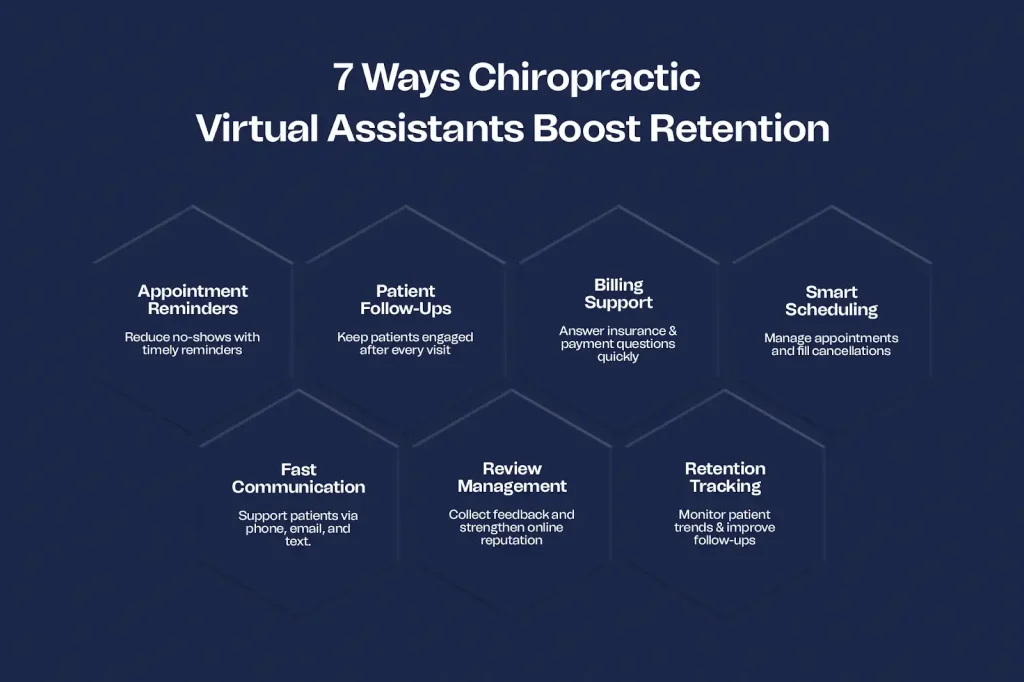
- Send consistent appointment reminders that cut down no-shows
- Build personal follow-up relationships after each visit
- Is there a signed BuHandle insurance and billing questions without delaysiness Associate Agreement and clear HIPAA training in place?
- Keep the office schedule fast, organized, and patient-friendly
- Maintain clear communication across phone, email, and text
- Manage online reviews and gathering honest patient feedback
- Track retention data so clinics know what is working
Send Consistent Appointment Reminders That Cut Down No-Shows
Chiropractic care depends on consistency. A treatment plan built around weekly adjustments loses value if a patient skips a few sessions, and every no-show is an empty chair that’s hard to fill on short notice.
A skilled virtual assistant for chiropractic office builds a multi-touch reminder system instead of a single generic text the night before:
- An initial confirmation right after booking
- A reminder 48 to 72 hours out, so patients still have time to reschedule
- A final reminder the day before or morning of, sent through the patient's preferred channel
- A friendly rescheduling nudge if a patient doesn't confirm
This steady rhythm builds a habit of regular visits, one of the strongest drivers of retention. It also frees up front-desk staff to focus on in-person care instead of calling down a list of bookings. Catching a cancellation early enough to refill the slot is often the difference between a slow afternoon and a fully booked one.
Build Personal Follow-Up Relationships After Each Visit
Recovery doesn’t end when a patient leaves the room. Pain levels shift, home routines slip, and motivation dips between visits. A thoughtful virtual assistant chiropractics checks in to ask how the patient is feeling and whether the care plan needs adjusting.
These check-ins can take a few forms:
- A short text or email 24 to 48 hours after a visit
- A phone call after a first visit or a change in treatment plan
- A brief survey question in a follow-up message
- A note flagging concerning comments, like increased pain or missed exercises, for the chiropractor to review
These small, genuine check-ins make patients feel valued instead of just a name on a schedule. Over time, that turns first-time visitors into loyal, returning patients. This ongoing contact also acts as an early warning system: if someone’s recovery has stalled or their motivation is slipping, a good follow-up can surface before they simply stop showing up.
Manage Online Reviews And Gathering Honest Patient Feedback
Online reviews shape a new patient’s first impression, but they also affect how existing patients view the clinic. A steady stream of recent, positive reviews reassures current patients, while unanswered complaints can quietly erode confidence.
A dedicated virtual assistant builds this feedback loop by:
- Sending a review request shortly after a positive visit
- Responding to reviews professionally, thanking patients for positive feedback and addressing negative feedback with empathy
- Flagging recurring complaints, like wait times or billing confusion, to clinic leadership before they go public
- Collecting informal feedback through short surveys
Research from the National Institutes of Health shows that patient satisfaction and communication quality strongly influence whether patients continue treatment. A clinic that only hears about a problem after it’s posted online has already lost the chance to fix it quietly.
Handle Insurance And Billing Questions Without Delay
Confusing bills and slow insurance answers push patients away, often for reasons that have nothing to do with the quality of their care. Chiropractic billing is genuinely complicated, and an unclear statement builds frustration fast.
A dedicated virtual chiropractic assistant handles this by:
- Verifying insurance eligibility and benefits before the appointment
- Explaining coverage in plain language
- Following up quickly on billing questions or disputed charges
- Coordinating with insurance providers on claims, denials, and pre-authorizations
- Sending clear, itemized statements
Clear, honest financial communication builds trust, and that trust is what keeps patients coming back. Patients who feel misled about costs rarely complain directly. They just stop booking. Understanding what they owe, and why, keeps them from feeling blindsided at checkout.
Maintain Clear Communication Across Phone, Email, And Text
Patients want quick answers whether they reach out by phone, email, or text, and they expect to switch between channels without repeating themselves. A dedicated virtual assistant keeps every channel synchronized by:
- Monitoring phone, email, and text inboxes throughout the day
- Logging every interaction in one place, so any staff member has full context
- Routing clinical questions to the chiropractor while handling admin questions directly
- Setting clear expectations, like "You'll hear back within one business day"
This reliability reassures patients that their questions matter, which strengthens their connection to the clinic. It also prevents a common breakdown: a patient’s question getting lost between the front desk, the provider, and billing. A single point of coordination closes that gap.
Track Retention Data So Clinics Know What Is Working
Numbers tell a clear story about patient behavior, often before anyone notices by instinct alone. A dedicated virtual assistant tracks:
- Visit frequency and gaps between appointments
- Cancellation and no-show patterns
- Follow-up completion rates
- Review and satisfaction trends over time
- Rebooking rates at the end of a treatment plan
With this data, chiropractors can spot warning signs early, like a patient spacing out visits, and adjust outreach before that patient disappears altogether. The American Chiropractic Association highlights consistent patient engagement as key to long-term treatment success, and consistent tracking is what makes that engagement measurable instead of just a hunch.
Keep The Office Schedule Fast, Organized, And Patient-Friendly
Long hold times and scheduling mix-ups frustrate patients before they even walk in. In a growing practice, the front desk juggles calls, walk-ins, and a full waiting room at once, and scheduling is usually the first thing that suffers.
A dedicated virtual assistant manages the calendar in real time by:
- Answering scheduling calls and messages promptly, even during peak hours
- Filling last-minute cancellations from a waitlist
- Confirming bookings immediately
- Coordinating recurring appointment series for multi-week treatment plans
- Flagging scheduling conflicts before they become a problem at check-in
According to the Bureau of Labor Statistics, demand for chiropractic care is expected to grow steadily, which makes efficient scheduling more important than ever. A clinic that can’t scale its scheduling alongside demand risks losing new patients to shorter wait times elsewhere, even with excellent clinical care.
Summary
Patient retention in 2026 depends on consistent communication, smooth admin work, and genuine follow-up care. A chiropractic virtual assistant brings all three together, handling reminders, billing, scheduling, and feedback so your team can focus on hands-on treatment. Clinics that invest in this kind of support build stronger patient relationships and steadier growth.
- Does the assistant understand collaboration and supervision agreements well enough to route scheduling and documentation correctly between a PA and supervising physician?
- Are they trained on your specific EHR and scheduling platform before they start?
- Is there a signed Business Associate Agreement and clear HIPAA training in place?
- Can the service scale support up or down as patient volume or a teaching rotation changes?
- What is the onboarding timeline, and is there a trial period before committing?
Want happier patients without hiring more front-desk staff?
Frequently Asked Questions
It sends a layered system of reminders through text, email, or calls, timed early enough that patients can reschedule instead of simply skipping.
It manages scheduling, insurance verification, follow-up calls and messages, review responses, billing questions, and patient communication, all while keeping records synced.
Costs vary by workload and hours, but many clinics find it more affordable than hiring additional in-house staff, since a VA can flex up or down with patient volume.
They respond quickly, communicate clearly, and follow up personally, making patients feel heard rather than forgotten between appointments.

Joseph D Hagen
Table of Contents


- Follow Us
Let our experts handle scheduling, calls, documentation, and paperwork 24/7
