

The Duties of Virtual Receptionist Dental Office
- October 27 2026

Table of Contents
A dental office needs clear and quick communication every day. Patients call to book visits, ask about insurance, learn about treatments, and get help with urgent problems. When the front desk is busy checking in patients or helping in the treatment room, some calls may go unanswered.
In a virtual receptionist dental office setup, a trained receptionist works from another location and handles front desk tasks for the practice. This person uses the office phone system, scheduling software, and messaging tools. Patients get fast and polite service, and the office team can focus on patient care.
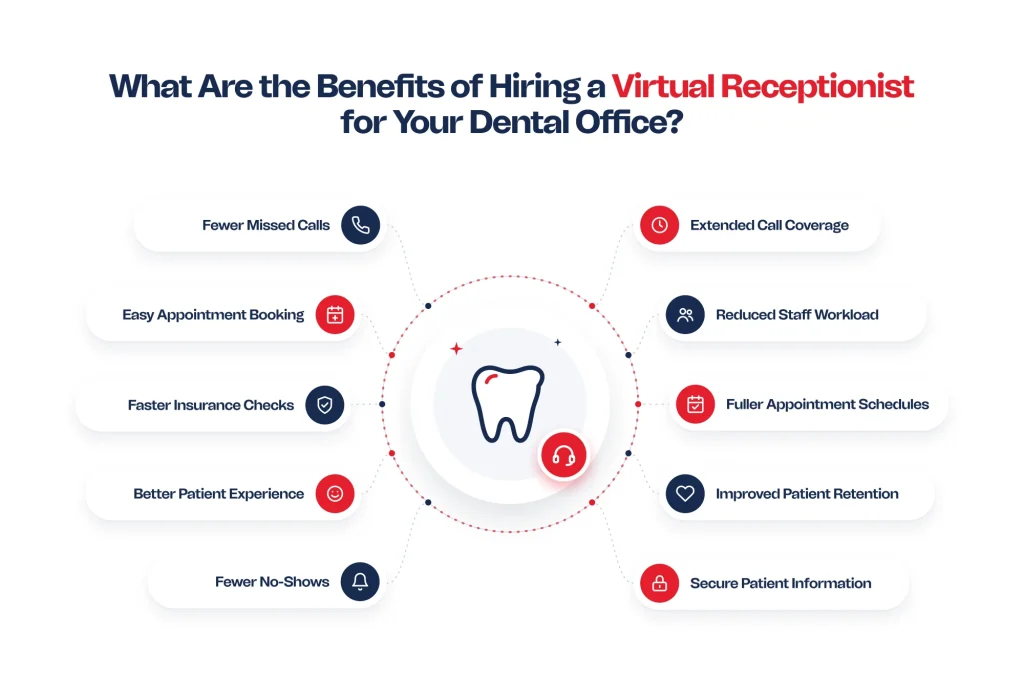
Below are the key virtual receptionist duties in a dental practice, each explained in detail.
- Answering Patient Calls Quickly and Politely
- Booking Appointments the Right Way
- Confirming Visits and Reducing No-Shows
- Making New Patient Intake Easy
- Checking Insurance Before Every Visit
- Giving Clear Answers to Patient Questions
- Handling After-Hours and Urgent Calls
- Helping with Billing and Payment Questions
- Bringing Patients Back Through Recall Calls
- Keeping Patient Records Correct and Up to Date
Answering Patient Calls Quickly and Politely
Most patients still contact a dental office by phone. A remote receptionist answers each call with the practice’s name and a friendly greeting. The receptionist then finds out what the caller needs and takes the right next step.
This support keeps phone lines open during lunch breaks, staff meetings, and busy mornings. New patients can speak with a real person instead of leaving a voicemail.
- Greets callers using scripts approved by the practice
- Takes extra calls when office lines are busy
- Writes clear messages and sends them to the right team member
- Returns missed calls and voicemails quickly
Booking Appointments the Right Way
A well-planned calendar helps both patient care and practice income. Knowing how virtual receptionists handle dental appointments shows why this role matters so much. The receptionist checks open times in the schedule and books each patient into the right slot.
Careful booking stops double bookings and fills empty gaps in the day. It also makes booking quick and easy for patients.
- Matches each visit type with the right dentist and the needed chair time
- Moves or cancels appointments based on office rules
- Fills last-minute openings from a waiting list when possible
- Works inside practice software such as Dentrix, Eaglesoft, or Open Dental when the systems are connected
Confirming Visits and Reducing No-Shows
Missed visits leave empty chairs and waste valuable time. To protect the schedule, the receptionist confirms upcoming visits and sends reminders in the way each patient prefers.
If a patient cannot come, the receptionist offers a new time right away. This simple step helps the office fill the open slot and keeps the patient on track with their care.
- Confirms visits by phone, text, or email
- Sends reminders at times set by the practice
- Books a new date for patients who need to change plans
- Marks confirmed visits in the schedule for the office team
Making New Patient Intake Easy
First impressions matter, especially for someone looking for a new dentist. A virtual dental receptionist welcomes new patients, explains what will happen at the first visit, and collects the needed details before the appointment.
When intake is done early, patients spend less time filling out forms in the waiting room. The dental team can also review the medical history before the patient arrives.
- Sends online intake forms to fill out before the visit
- Collects key details, such as contact information, medical history, and insurance information
- Shares helpful tips about arrival time and what documents to bring
- Speeds up check-in for a smoother first visit
Checking Insurance Before Every Visit
Questions about coverage can lead to delays and unexpected bills. Checking eligibility early helps prevent these problems and supports correct cost estimates.
With confirmed details on file, the front desk can talk about costs openly. Patients value this honesty, and the practice faces fewer claim problems.
- Confirms active coverage with the insurance company
- Reviews benefit details, such as limits on how often cleanings and exams are covered
- Points out expired or inactive plans before the appointment
- Saves the results in the patient's account for easy use later
Giving Clear Answers to Patient Questions
Patients often call with simple questions that still need correct answers. Using information approved by the practice, a dental virtual receptionist answers clearly and in the same way every time.
Today, patients also reach out through many channels. A remote team can handle all of these messages with the same polite tone, so every patient has a similar experience.
- Office details, such as hours, location, and parking
- Service information about preventive, cosmetic, and restorative care
- Accepted insurance plans and payment choices
- Text, web chat, and email messages handled with the same care as phone calls
Handling After-Hours and Urgent Calls
Dental problems do not always happen during office hours. When a patient calls at night or on a weekend, the receptionist follows the practice’s written emergency plan.
This support gives patients comfort during stressful moments. It also keeps the dentist informed without having to answer every simple call.
- Spots urgent problems, such as severe pain, swelling, or a knocked-out tooth
- Contacts the on-call dentist based on the practice's instructions
- Sends life-threatening cases to emergency services
- Writes down each call so the team can follow up the next business day
Helping with Billing and Payment Questions
Clear talks about money help patients trust the practice. Using only the access the office allows, a dental office virtual receptionist can help with simple billing questions.
Polite reminders help patients keep their accounts up to date. Harder billing issues stay with the practice’s billing staff.
- Answers simple balance questions using current account details
- Sends polite payment reminders for amounts that are due
- Explains payment choices and financing plans the practice offers
- Passes complex billing issues to the right team member
Bringing Patients Back Through Recall Calls
Regular checkups keep patients healthy and help the practice grow. Virtual receptionists contact patients who are overdue for care and invite them to come back.
Regular recall efforts build strong, long-term patient relationships. They also help patients finish the treatment their dentist has recommended.
- Calls patients who are due for cleanings and regular exams
- Follows up on unscheduled treatment suggested by the dentist
- Reconnects with patients who have not visited in a long time
- Tracks call results so the practice can see progress
Keeping Patient Records Correct and Up to Date
Good records help with safe care and smooth daily work. Every call, booking, and change is recorded so the office team has accurate patient information. These records may contain protected health information, so privacy must come first. Dental practices should review the official HIPAA guidance on business associates to understand when a virtual receptionist provider needs a Business Associate Agreement (BAA) and how patient information must be protected.
- Updates contact and insurance details after each conversation
- Saves call notes so the whole team stays informed
- Follows HIPAA-compliant steps when handling patient data
- Uses secure logins with access limited to each person's role
Is Your Front Desk Too Busy to Answer Every Call?
Conclusion
A virtual receptionist improves almost every step of the patient’s journey. From the first phone call to recall reminders, this role keeps communication quick, correct, and professional. It also gives the office team more time to care for patients in person.
The common tasks handled by a virtual dental receptionist include answering calls, booking visits, intake, insurance checks, and billing help. When these tasks are done well, practices enjoy fuller schedules, happier patients, and a lighter workload for staff.
Frequently Asked Questions
Learning how a virtual receptionist works for a dental office starts with training. The provider learns the practice’s services, rules, and scheduling needs. Next, it connects to the phone system and, when possible, the practice software before calls are sent to the team.
Yes. A virtual receptionist for small dental practice needs covers breaks, staff absences, and after-hours calls. Smaller offices get reliable phone support without paying for another full-time employee.
The virtual receptionist vs in-house dental receptionist comparison shows that both have clear strengths. Remote teams offer longer hours and can grow with call volume, while office staff greet patients and handle in-person tasks. Many practices get the best results by using both.
A qualified provider follows HIPAA rules, signs a Business Associate Agreement, and uses secure systems with limited access. Practices should ask for these safety steps in writing before starting the service.
The best virtual receptionist service for dental offices offers dental training, HIPAA compliance, software connection, clear pricing, and access to a live person for difficult calls. Clear performance reports and a trial period are also good signs of a trustworthy partner.

Dr. Shane Wilson
Table of Contents


- Follow Us
Let our experts handle scheduling, calls, documentation, and paperwork 24/7