

How Remote Dental Insurance Verification Reduces Claim Denials
- June 18, 2026
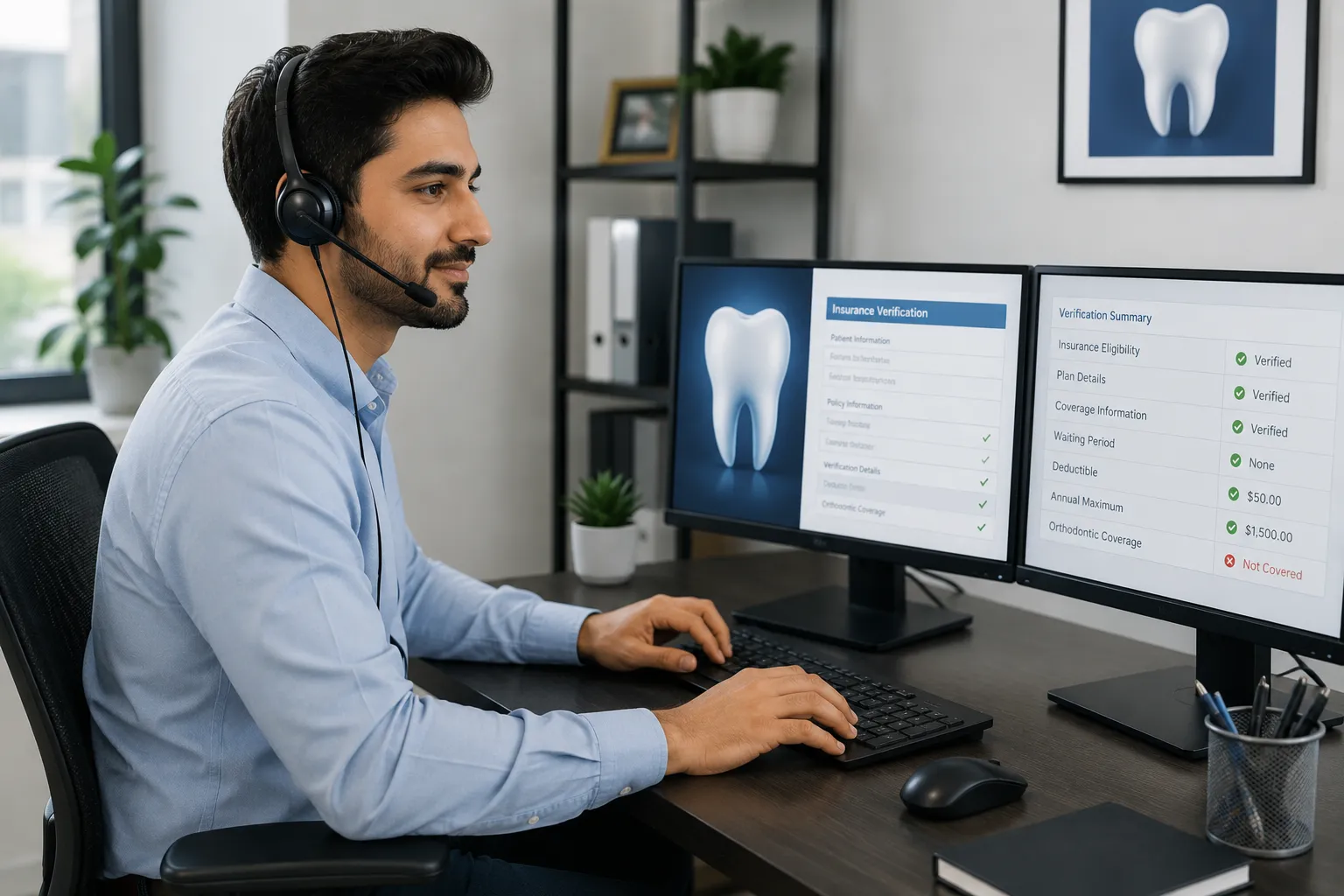
Table of Contents
Dental practices work hard every day to deliver great patient care. Getting paid for that care is a separate challenge. Many dental offices lose money in completely avoidable ways. Insurance claim denials are one of the biggest causes of this problem. Most of these denials result from verification errors made before the visit. Remote dental insurance verification helps practices solve this problem faster and more reliably. Many forward-thinking practices are already using it with great results.
What Is Remote Insurance Verification and Why Does It Matter?
Insurance verification is the process dental practices rely on to confirm a patient’s dental benefits before their appointment. The team checks coverage details, deductibles, annual maximums, and waiting periods. They also review procedure-specific limitations with the patient’s insurance carrier in advance.
Remote insurance verification moves this task outside the physical office. A dedicated team handles all calls, portal checks, and paperwork from a separate location. This setup frees up the front desk to focus on patients who are physically present.
Here is why this matters financially:
- Claim denials cost dental offices thousands of dollars per month in lost collections and extra labor.
- Many of those denials stem from eligibility issues, such as the practice billing the wrong plan or failing to confirm coverage.
- Practices that verify benefits on every patient collect significantly more per visit. Patients receive accurate billing information from the very start.
- Remote verification brings speed, consistency, and volume that an in-office front desk team cannot match on its own.
How Dental Insurance Errors Quietly Drain Your Revenue
Understanding where money goes wrong helps practices fix the problem faster. Insurance-related revenue loss follows clear and predictable patterns in dental offices.
1. Eligibility and Benefit Errors
The office cannot bill correctly when the patient’s coverage has not been confirmed. A patient may have switched jobs, lost coverage, or changed carriers recently. The practice often has no way of knowing this before the appointment. The claim goes out, the carrier rejects it, and the billing team spends time chasing it down. Many of these claims eventually become write-offs.
2. Incorrect Co-Pay Collection
Without verified benefit details, the front desk guesses the co-pay based on old or assumed coverage.
- A low estimate means the practice never collects the full balance.
- A high estimate causes the patient to call in and dispute the charge.
Both situations take up time and reduce trust between the patient and the practice.
3. Coordination of Benefits (COB) Mistakes
Some patients carry dual coverage under two separate insurance plans. A primary plan may come through their employer, and a secondary plan may come through a spouse. These cases require COB verification before the claim is sent out. Skipping this step leads to incorrect filings, slow payments, and increased write-offs.
4. Waiting Period and Frequency Limitation Oversights
Many insurance plans include waiting periods for major procedures like crowns or implants. Plans also set frequency limitations on services like X-rays or cleanings. Scheduling and completing a procedure before a waiting period ends results in a denial. Performing a service more often than the plan allows causes the same outcome.
The Remote Verification Process Step by Step
A well-run remote dental insurance verification service follows a clear and repeatable series of steps. Practice managers who understand these steps can set expectations, train staff, and review service providers with greater confidence.
Step 1: Appointment Scheduling Triggers the Workflow
The remote verification team receives the patient’s insurance details the moment a new appointment is booked. The ideal window is 48 to 72 hours before the visit. This lead time gives the team enough time to contact the carrier and check online portals. The team completes all documentation before the patient arrives.
Step 2: Carrier Contact and Benefit Breakdown
The verifier contacts the insurance carrier by phone, via the web portal, or through an electronic eligibility inquiry. The team collects all the necessary information during this contact:
- Plan name and group number confirmation
- Effective date and termination date
- Annual maximum and amount used
- Deductible (individual and family) and amount already met
- Coverage percentages by service category (preventive, basic, major, orthodontic)
- Waiting periods for specific procedure codes
- Frequency limitations (for example, bitewing X-rays twice per year)
- Missing tooth clause for practices that place implants or bridges
- Coordination of benefits details when the patient carries dual coverage
Step 3: Documentation in the Practice Management System
The team enters all verified information directly into the practice’s management software. It includes platforms such as Dentrix, Eaglesoft, and Curve Dental. Proper documentation creates a clear record that connects to the specific appointment. The clinical team, billing department, and front desk all access the same accurate data.
Step 4: Patient Communication Before the Appointment
Early verification gives the front desk time to speak with the patient before the visit. The team can share the estimated out-of-pocket cost without any last-minute pressure. This conversation sets clear financial expectations before the patient walks through the door. The front desk can also collect payment arrangements for larger procedures in advance. Patients who know their costs in advance pay more reliably at checkout.
Step 5: Day-of Confirmation
On the day of the appointment, the front desk runs a quick final check to confirm that no changes have occurred. The team then collects the estimated patient portion with full confidence in the accuracy of the numbers.
Why a Remote Team for Dental Insurance Verification Outperforms an Overwhelmed Front Desk
A virtual medical receptionist in a dental practice handles many tasks simultaneously. On a busy morning, the front desk answers phones, checks patients in, and processes payments. The same person schedules future appointments and responds to incoming messages. All of this happens while patients stand right in front of the desk waiting for help.
Verification requires focused time and full attention. Getting a complete benefits breakdown from an insurance carrier takes 15 to 45 minutes. Hold times and plan complexity both add to this estimate. When verification competes with live patient interactions, the quality of one or both tasks suffers.
It is where dental insurance verification outsourcing delivers its clearest advantage. Remote verification staff operate differently from in-office staff in key ways:
- They focus only on verification tasks with no competing responsibilities pulling their attention.
- They train specifically in insurance terminology, carrier portals, and dental procedure codes.
- They process high volumes of verifications, with skilled staff completing 20 to 40 cases per day.
- They work across time zones, with some services completing verifications before the office opens each morning.
This division of work allows each role to perform at its highest level. The front desk gives patients full attention. The remote team ensures every claim starts with a clean and accurate foundation.
The Financial Impact of Dental Insurance Verification That Practices Actually See
The numbers behind remote dental insurance verification get the attention of even skeptical practice owners. The data shows clear and measurable improvements across several key areas.
Reduced Claim Denial Rates
Practices with organized pre-verification programs see denial rates drop by 30 to 50 percent. Industry data consistently support this result across different practice sizes. Every avoided denial saves the practice from a second billing cycle or an appeal process. It also removes the need to make a write-off decision on money the practice has already earned.
Higher Point-of-Service Collections
Patients who know their estimated cost before they arrive pay more reliably at checkout. Practices report that point-of-service collections increase by 15 to 25 percent after setting financial expectations in advance. Higher same-day collections reduce accounts receivable aging across the practice. They also reduced the administrative work required to pursue outstanding balances.
Lower Cost Per Claim
A clean claim costs far less to process than a denied claim. Denial management covers appeals, corrected claims, follow-up calls, and write-offs. This process can use up 10 to 15 percent of the practice’s total billing resources. Remote verification lowers how often this costly rework cycle happens.
Stronger Patient Retention
Financial surprises prompt patients to seek a new dental provider. Patients who receive accurate cost estimates and clear billing develop stronger trust in the practice. That trust supports appointment compliance and treatment plan acceptance. Long-term loyalty from these patients adds lasting value to the practice.
Common Objections and Honest Answers About Remote Dental Insurance Verification
Some dental practice owners pause before investing in remote insurance verification. These concerns deserve thoughtful and clear responses.
"We Already Verify In-House. Why Change?"
In-house verification is a positive step forward. However, there is a real difference between attempting verification and thoroughly completing it for every single patient. Front desk staff doing verification between check-ins often produce inconsistent or rushed results. Remote teams bring structure, focus, and accountability that a multitasking environment cannot support consistently.
"It Seems Too Expensive."
The right question is not whether remote verification costs money. The real question is whether that cost is smaller than the revenue the practice loses without it. For most practices, claim denials, undercollections, and write-offs due to verification gaps exceed the cost of a dedicated solution. Viewed as an investment rather than an overhead expense, the numbers usually favor moving forward.
"Our Patients Have Simple Coverage."
Even simple-looking plans carry nuances that can lead to denials. Frequency limitations, deductible timing, waiting periods, and annual maximum details all require confirmation. A plan that appears straightforward can still result in a claim denial when the practice skips verification. Practices that assume simplicity often face the most unexpected write-offs.
Choosing the Right Remote Dental Verification Solution
Remote dental insurance verification services differ from one another in important ways. Practices should review several key factors before selecting an option.
In-House, Remote Staff vs. Third-Party Services
In-house remote staff are employees who work from a separate location but are fully part of the practice’s team. They use the same software and attend team meetings regularly. They also develop deep familiarity with the office’s patient population and daily workflows. This option offers strong control and close integration with the practice’s culture.
Third-party verification services are outside vendors that verify benefits for multiple practices. They typically offer lower per-verification costs and scale quickly with appointment volume. The main tradeoff is less customization and a more straightforward working relationship.
Both options deliver solid results in the right setting. Practice size, budget, and the desired level of integration all shape the best choice.
Software Integration
The verification solution must connect smoothly with the existing practice management system. Entering data into a separate spreadsheet and transferring it manually creates gaps and errors. The right solution writes verified data directly into the patient’s appointment record. It works across Dentrix, Eaglesoft, Open Dental, and similar platforms.
Turnaround Time Standards
A verification that arrives after the patient already sits in the chair helps no one. Practices should set clear turnaround standards before the workflow begins. Verified benefit breakdowns need to be complete and documented at least 24 hours before the appointment. Same-day or next-morning completion applies to appointments booked on short notice.
Quality Assurance and Accuracy Guarantees
Practices should ask every vendor or candidate how they measure and maintain accuracy. They also need to know what happens when a verification error leads to a claim denial. Trustworthy services maintain quality control processes and carry clear policies for handling mistakes.
Integrating Remote Verification Into Your Practice Workflow
Bringing dental practice insurance verification services into an existing workflow takes some upfront planning. The process moves smoothly with the right steps in place.
- Start with a workflow audit. Map out how insurance information travels from scheduling through to billing. Mark every point where a gap, delay, or error is likely to occur. This review shows exactly where remote verification fits and what handoffs the team needs to establish.
- Define the scheduling trigger clearly. Every team member who books appointments needs to know which details to collect when scheduling. They also need to know how quickly those details must reach the verification team. It typically covers the patient’s insurance card information, date of birth, and the anticipated procedures.
- Set documentation standards. Decide where verified benefit information is stored within the practice management system. Also, define the format every verifier must follow. Consistent documentation means any team member can read and understand the record instantly.
- Train the front desk on using verified data. The front desk team needs to be able to read a completed benefit breakdown clearly. They also need to know how to quote the patient accurately and handle questions about complex coverage. This training produces a fast and measurable return.
- Review denial trends every month. A monthly review of denial reasons keeps the team focused and sharp. A recurring denial type signals a gap in the verification checklist. The team can correct that gap before it grows into a larger revenue problem.
Building a Revenue-Positive Culture in Your Practice
Remote insurance verification reflects more than just a process improvement. It shows how seriously a practice manages its financial health. Practices that collect well share a set of common habits:
- They treat billing accuracy as a clinical standard, not just an office task.
- They help every team member understand how their role connects to collections.
- They build systems and processes that reduce human error across the workflow.
- They talk openly with patients about financial expectations and maintain transparent billing.
When a practice takes remote verification seriously, it often improves other areas, too. Treatment plan presentations become clearer. Financial conversations with patients become more comfortable. The billing team spends less time putting out fires and more time running a clean process.
Key Takeaways
Remote insurance verification stands among the highest-return investments a dental practice can make. These seven points summarize the most important ideas from this post:
- Verification must happen before the appointment, not at check-in or after the procedure.
- Remote teams are more consistent and thorough than multitasking front-desk staff.
- Patient financial conversations improve when the team has accurate benefit data in advance.
- Denial rates and write-offs drop measurably with a systematic pre-verification process.
- Point-of-service collections rise when patients know their costs before they arrive.
- The cost of verification is almost always lower than the revenue lost to preventable denials.
- Integration with practice management software keeps the workflow accurate and sustainable.
Still Losing Revenue to Preventable Claim Denials?
FAQs About Dental Insurance Verification
Verification done in-house between patient check-ins is often rushed or incomplete. Missing frequency limitation details, outdated deductible figures, or skipped COB checks are the usual culprits. A dedicated remote verification team with structured checklists catches these gaps consistently before every single claim goes out.
The ideal window is 48 to 72 hours before the appointment. This gives the team enough time to contact the carrier, resolve any discrepancies, and communicate the patient's estimated out-of-pocket cost in advance, avoiding financial surprises on the day of the visit.
Yes, every patient needs reverification before each appointment. Coverage changes frequently due to job changes, open enrollment updates, or plan terminations. Assuming a returning patient's insurance is unchanged is one of the leading causes of unexpected claim denials and patient billing disputes.
The team should confirm the plan name, group number, effective and termination dates, annual maximum, deductible status, coverage percentages by procedure category, waiting periods, frequency limitations, and coordination of benefits details if the patient carries dual coverage. Skipping any of these creates billing risk.
For most practices, outsourcing wins on accuracy and cost. Remote specialists handle 20 to 40 verifications daily with focused attention, while in-house front desk staff split focus across many competing tasks. The revenue recovered through cleaner claims typically exceeds the outsourcing cost by a meaningful margin.

Dr. Shane Wilson
Table of Contents


- Follow Us
Let our experts handle scheduling, calls, documentation, and paperwork 24/7
