

Why Small Practices Are Switching to Virtual Medical Staff Models in 2026
- July 24, 2026
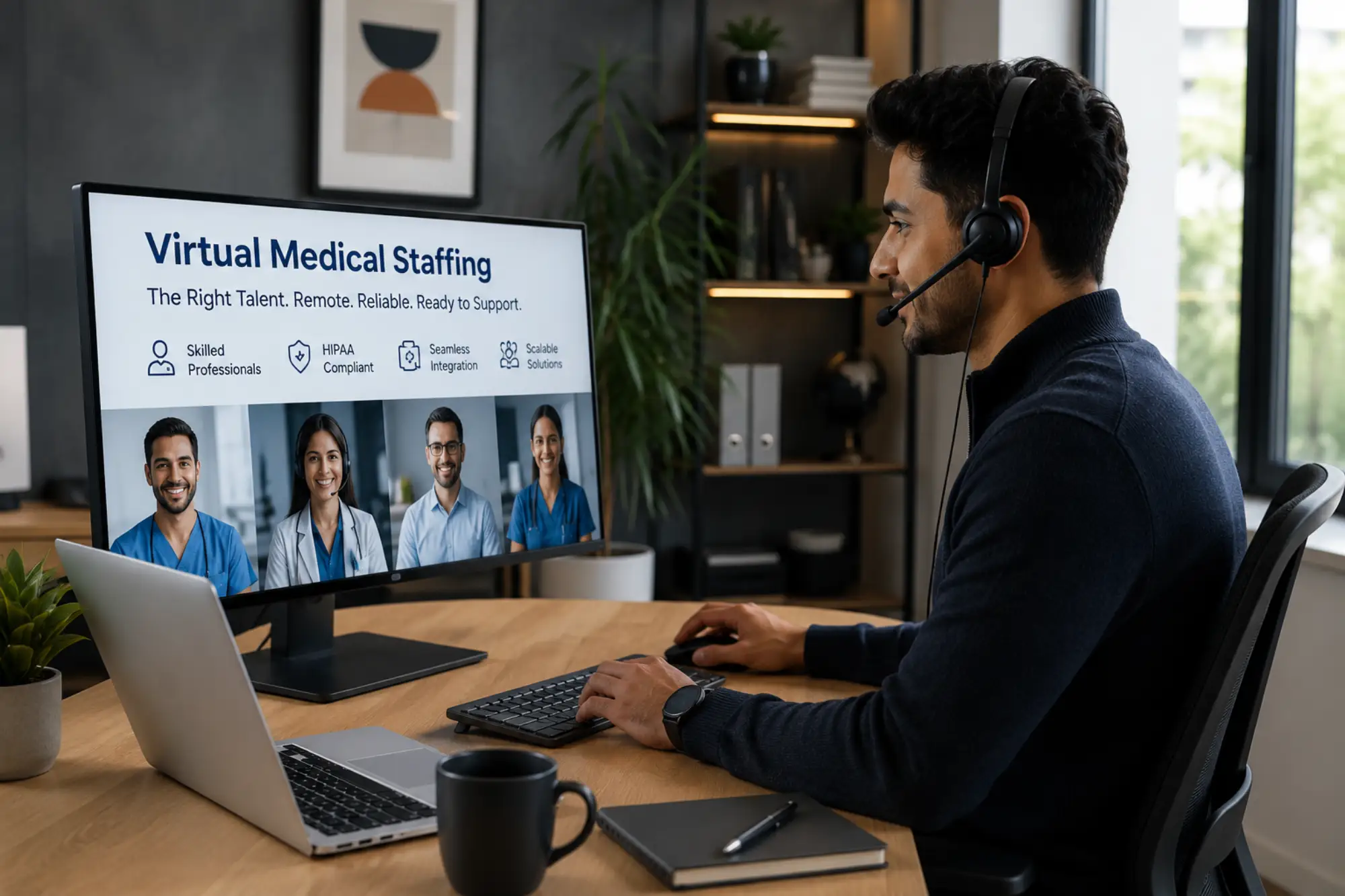
Table of Contents
Running a small medical practice in 2026 often means one clinician or a small team trying to do the work of a much larger office. Between patient calls, scheduling, insurance verification, and referral follow up, front desk hours fill up fast, and hiring local help has become slower and more expensive than it used to be. That is the main reason so many small practices are switching to virtual medical staff models this year. A virtual medical assistant for small practices takes on the repeatable administrative work that keeps piling up, without the cost and delay of another full time local hire. This article looks at what is driving the shift, what a virtual medical staffing model actually covers, and how a small practice can decide if it is the right move.
The Real Cost of Keeping Every Role Local
Hiring and keeping front office staff has become one of the most expensive parts of running a small practice. Wages for front desk, billing, and clinical support roles remain well above five and ten year levels even as overall pay growth has slowed, according to 2026 MGMA compensation research. Layer on rising benefit costs, projected to climb 6.7 percent per employee in 2026 according to MGMA benefits data, and the true cost of a single in house hire quickly climbs well past salary alone.
Recruiting is not getting easier either. Demand for medical assistants and similar front office roles is projected to grow 15 percent between 2023 and 2033, according to Bureau of Labor Statistics data cited by MGMA, far outpacing the supply of qualified local candidates. In its own polling, MGMA also finds that front office and medical assistant positions are the roles practice leaders cite most often when turnover rises. For a solo or two provider practice, losing one trained front desk employee can mean weeks of disrupted scheduling and patient communication while a replacement is found and trained.
A virtual medical staffing model sidesteps much of this pressure. Instead of competing for a shrinking local labor pool, a small practice can bring on a dedicated remote professional who is already trained, already familiar with healthcare workflows, and ready to start in days rather than months.
Administrative Burden Is Still the Top Driver of Burnout
Cost is only part of the story. The other driver is time, specifically how much of it goes to administrative work instead of patients. In its most recent national survey, the American Medical Association found that 41.9 percent of physicians reported at least one symptom of burnout, and identified excessive administrative tasks as the leading cause by the widest margin. That burden falls hardest on small practices, where there is no large back office to absorb overflow work.
For many physicians and practice managers, the daily list looks familiar: unanswered calls, unconfirmed appointments, insurance verifications that stall a visit, and referrals nobody can find an update on. None of this requires a physician’s clinical judgment, but all of it competes for the same hours in the day. A virtual medical assistant for small practices exists specifically to take on this category of work, so the in house team can spend more of its time on direct patient care rather than repetitive follow up.
What a Virtual Medical Staff Model Actually Covers
Virtual medical staff can mean different things depending on who is describing it, so it helps to be specific about scope. For a small practice, a well structured virtual medical assistant service typically supports tasks such as:
- Appointment scheduling and calendar management
- Patient intake and pre visit data collection
- Insurance verification and eligibility checks
- Referral coordination and follow up
- Prior authorization support and status tracking
- EHR documentation support, including inbox and message management
- Prescription refill coordination
- Fax handling and routine correspondence
- Fax handling and routine correspondence
- Virtual receptionist coverage for incoming calls
These are the tasks that consume front office hours without requiring a provider’s direct involvement. A dedicated virtual medical assistant, like the ones VirtualCare Assistants places with practices across the country, works inside the practice’s existing scheduling and EHR systems rather than replacing them, so the transition feels more like adding a team member than adopting new software.
Is a Virtual Medical Assistant Right for a Small Practice?
Not every practice needs the same amount of support, but a few signals point clearly toward a virtual assistant for small medical practice being worth exploring:
- Calls are going to voicemail or being missed during peak hours
- Referrals and prior authorizations are tracked informally, without a shared log
- Staff turnover keeps interrupting front desk continuity
- The provider or office manager is doing administrative work after hours
- Growth is limited by how much the current team can handle, not by patient demand
If two or more of these sound familiar, a virtual medical assistant for small practices is likely to produce a fast, measurable improvement rather than a marginal one. Practices with a single clear bottleneck, such as phones or referrals, tend to see the quickest results because the virtual team can focus entirely on that lane from day one.
What to Look for in the Best Virtual Assistant for a Small Practice
Once a practice decides to explore virtual support, the harder question becomes which provider to trust with patient facing work. A short evaluation checklist helps narrow the field.
HIPAA Compliance and a Signed BAA
Any legitimate virtual medical assistant service should operate under HIPAA compliant protocols and be willing to sign a Business Associate Agreement before handling any patient information. This should never be treated as optional or added later.
Clear Task Ownership
The strongest arrangements give the virtual medical assistant a defined lane, such as scheduling and intake, or referral coordination, with documented rules for what gets escalated to in house staff. Vague, catch all arrangements tend to create more confusion than they resolve.
EHR and Workflow Compatibility
A virtual assistant for small medical practice should be trained to work inside the systems the practice already uses, not require the practice to adopt new software just to make the arrangement work.
Specialty Familiarity
Administrative workflows differ across specialties. A virtual assistant familiar with a practice’s specialty, whether primary care, behavioral health, or a procedure heavy specialty, ramps up faster and makes fewer avoidable errors.
A Real Trial Period
The best virtual assistant for a small practice is one the practice can evaluate directly, through a trial period, before committing to a longer arrangement. This lowers the risk of the decision considerably.
Getting Started With Virtual Medical Assistant Services for Small Practices
Most practices do not need to overhaul their entire operation to see the benefit of a virtual medical staffing model. A practical starting point is to identify the single most painful bottleneck, whether that is phones, scheduling, referrals, or insurance verification, and bring in dedicated support for that one area first. Once the workflow is running smoothly, many practices expand the arrangement to cover additional tasks such as patient intake or EHR inbox management.
VirtualCare Assistants works with small and solo practices to match a dedicated virtual medical assistant to the specific administrative gaps slowing the practice down, with support for scheduling, insurance verification, referral coordination, and virtual receptionist coverage built around each practice’s existing systems. Practices interested in seeing how this fits their own workflow can explore VirtualCare Assistants’ virtual medical assistant services or start a conversation about where the support would help most.
Conclusion
The practices making this switch in 2026 are not chasing a trend so much as responding to two pressures that are not easing on their own: the rising cost and scarcity of local administrative staff, and the steady weight of administrative work on physician time. A virtual medical staff model gives small practices a way to close both gaps at once, without adding permanent overhead or asking an already stretched team to absorb more.
If administrative work is limiting how your practice runs day to day, a conversation with VirtualCare Assistants is a low risk way to see what a dedicated virtual medical assistant could take off your plate.
Take administrative work off your team this week.
Frequently Asked Questions
A virtual medical staff model uses remote, trained professionals to handle administrative and clinical support tasks such as scheduling, intake, insurance verification, and referral coordination, allowing in house teams to focus more on direct patient care.
Yes. Solo and small practices often benefit the most, since a single missed call or delayed referral has an outsized impact when there is no larger team to absorb it. A dedicated virtual medical assistant can cover exactly the gap a solo practice is feeling.
Not typically. Most practices use virtual medical assistants alongside their in house team, taking on repetitive administrative tasks so existing staff can focus on in person patient interaction and higher value work.
Not typically. Most practices use virtual medical assistants alongside their in house team, taking on repetitive administrative tasks so existing staff can focus on in person patient interaction and higher value work.
It should be. Any reputable virtual medical assistant service operates under HIPAA compliant protocols and signs a Business Associate Agreement with the practice before handling patient information.

Dr. Shane Wilson
Table of Contents


- Follow Us
Let our experts handle scheduling, calls, documentation, and paperwork 24/7
